 Dayton Tuckpointing
 Chimney Tuckpointing and Rebuilds in Dayton
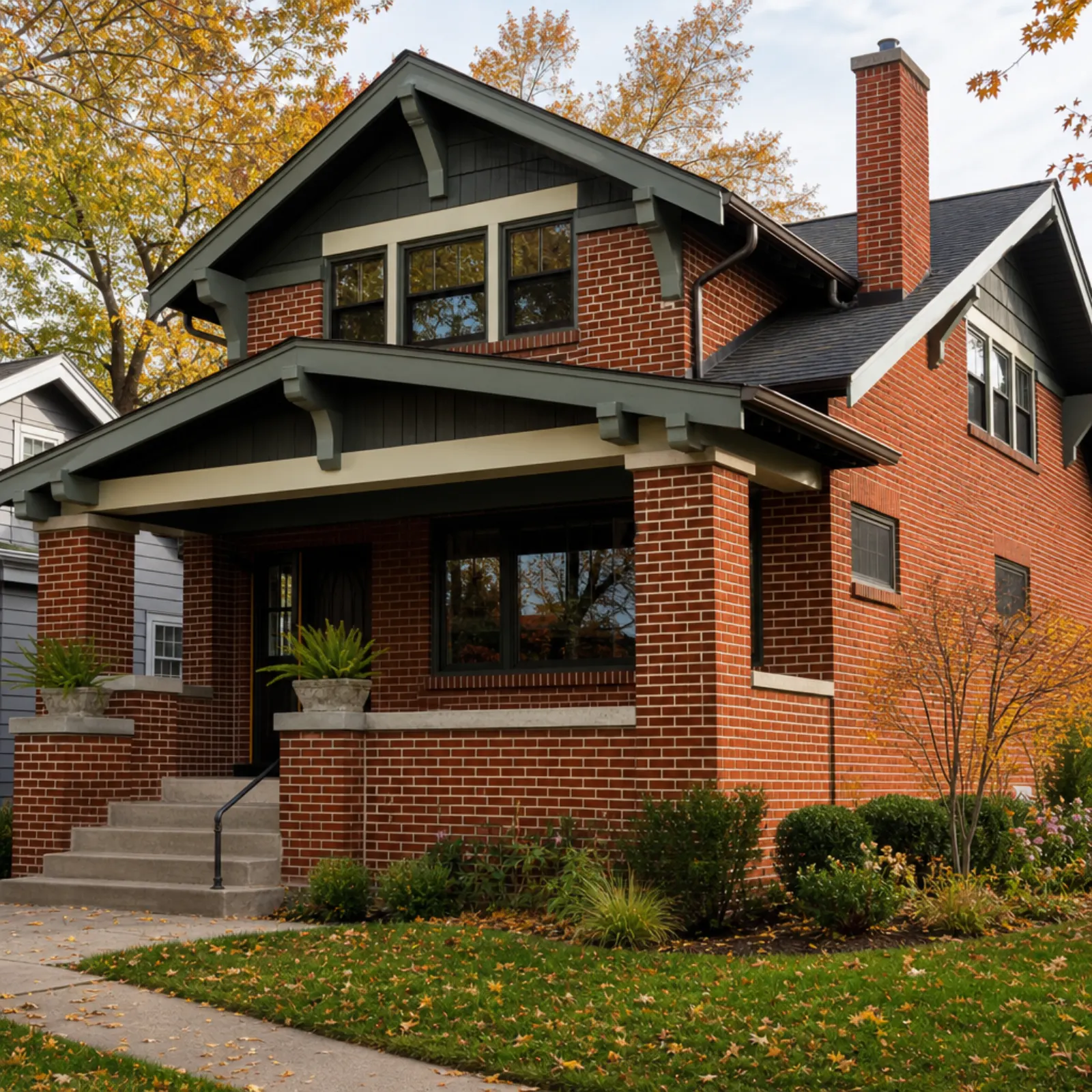
Chimney repointing in Dayton runs $800 to $2,500, a cast concrete crown $400 to $1,200, and a rebuild from the roofline $2,500 to $7,000, with a rare full rebuild from the firebox at $8,000 to $20,000. The chimney is the first masonry to fail on almost every Dayton house, and the crown is almost always why. Send a photo of the top of the stack and the first six courses and you get a straight answer on whether it is a repoint, a crown, or a rebuild.
Why chimneys go first
A chimney is the most exposed masonry on the house. It stands above the roof with weather on four sides, it is wet from rain outside and from flue condensation inside, and nothing shelters it. Then Dayton’s climate does what it does: NOAA’s normals put the January high at 37.1 degrees and the low at 21.8, and the Federal Highway Administration counts roughly 110 air freeze-thaw cycles a year in Ohio. Water in a joint expands about 9 percent every time it freezes. On a chimney that water enters from the top, so the failure runs from the top course down.
Most Dayton chimneys, from the 1880s stacks in St. Anne’s Hill to the 1960s single-flue chimneys on Huber Heights ranches, were finished with a mortar wash: a thin slope of mortar troweled over the top course. Mortar is not made to span or flex, so the wash cracks within a few winters. Water runs through the cracks, down the outside of the flue liner, and into the brick from the inside. By the time the outside joints look bad, the inside of the stack has usually been wet for years.
The sequence is predictable: the wash cracks, the top three or four courses lose their joints, the faces of those brick spall, the cap or flue tile heaves, and eventually the top of the stack leans toward the prevailing weather. On a 19th-century chimney in lime mortar the joints go before the brick; on one repointed in hard Portland, the brick faces pop first while the joints stand proud.
Repoint, crown, or rebuild
Repointing, $800 to $2,500. Right when the brick faces are sound and the failure is the joints. Mortar is cut out to at least two and a half times the joint width, repacked in lifts, and tooled to match. Almost every repointing job includes a new crown, because pointing a chimney under a cracked wash is repointing it again in three years.
Crown replacement, $400 to $1,200. The old wash is chipped off, a form is set, and a concrete crown is cast at least a couple of inches thick, overhanging the brick with a drip edge so water falls clear of the face, with a bond break around the flue so the liner can expand without cracking the crown. A stainless cap on top keeps rain and animals out of the flue. If your chimney gets only one thing this year, this is it.
Rebuild from the roofline, $2,500 to $7,000. When more than a third of the brick is spalled, when the stack leans or bulges, or when the flue tiles have cracked, repointing is spending money on brick that is leaving anyway. The stack comes down to sound brick at or below the roofline, the flue liner is inspected and replaced where needed, and the chimney goes back up in matched brick and matched mortar with a new crown, cap, and counter-flashing let into the joints. Corbelled tops on Victorian chimneys are rebuilt to the original profile from photos.
Full rebuild from the firebox, $8,000 to $20,000. Rare, and usually the result of a chimney that leaked long enough to rot the framing around it or crack the smoke chamber. An honest mason will tell you if you are there, and tell you just as plainly if you are not.
Flashing, the other leak
Half the “chimney leaks” in Dayton are not the masonry. Step flashing tucked under the shingles and counter-flashing let into the mortar joints is what seals the chimney to the roof, and it fails when the counter-flashing was surface-caulked to the brick instead of cut in, or when a roofer replaced the shingles and reused rusted flashing. A rebuild always includes new counter-flashing cut into the joints; a repoint includes it when the old flashing is the problem. If the stain on your ceiling is at the chimney’s downhill side, suspect the flashing before the brick.
Historic chimneys
The 1860s to 1920s chimneys in the Oregon District, St. Anne’s Hill, Huffman, South Park, Dayton View, Grafton Hill, and Oakwood were laid in lime mortar and must be repointed in a compatible lime mix, not Type S. Preservation Brief 2 is explicit that a mortar harder than the brick spalls the brick, and on a chimney that failure is fast because the brick is wet from both sides. Inside one of Dayton’s 13 locally designated historic districts, a Certificate of Appropriateness is required before exterior work and there is no fee; a like-for-like repoint or crown is the kind of routine item the Preservation Officer can clear, while a rebuild that changes the stack’s height or profile goes to the seven-member Landmark Commission. In Springfield’s South Fountain and East High Street districts, the city’s guidelines specifically name chimneys among the masonry details to retain, and repointing is a staff-level review with a mortar sample.
Mid-century chimneys
The single-flue brick chimneys on Kettering’s postwar streets and on the Huber Homes ranches built from 1956 on are hard machine-made brick in Type N mortar. They fail at the wash and the top courses like everything else, but the brick tolerates a modern mortar, and matching units are easy to source. Many of these chimneys serve a furnace flue rather than a fireplace, and a high-efficiency furnace that no longer uses the flue leaves it cold and wet; a cap and crown matter even more on a chimney that nothing warms.
What it costs
| Scope | Range |
|---|---|
| Chimney repointing (above roofline) | $800 to $2,500 |
| Crown replacement | $400 to $1,200 |
| Rebuild from the roofline | $2,500 to $7,000 |
| Full rebuild from the firebox | $8,000 to $20,000 |
Height, roof pitch, and access set the number as much as the masonry does; a stack on a steep slate roof in Dayton View costs more to reach than the same stack on a Centerville ranch. The pricing page has the full table. If the chimney’s brick faces are spalling but the joints look fine, that is a mortar-mismatch failure and the brick repair page explains it.
Timing
Chimney work is the most weather-sensitive masonry on the house because it is the most exposed. Mortar wants wall temperatures between 40 and 95 degrees, and NWS Wilmington puts Dayton’s average first fall freeze at October 25 and last spring freeze at April 16. A cracked crown in September is an urgent fall job; a leaning stack in December gets tarped and scheduled for the first warm week of spring, unless it is unsafe, in which case it comes down.
Chimney repointing and rebuilds are covered across Dayton and in Oakwood, Kettering, Beavercreek, Centerville, Huber Heights, and Springfield. Send a photo of the top of the chimney from the ground, one of the flashing line at the roof, and any stains inside, and we can put it in a tier with a number.
Frequently Asked Questions
How much does chimney repointing cost in Dayton?
$800 to $2,500 to repoint above the roofline, $400 to $1,200 for a new cast concrete crown, and $2,500 to $7,000 to rebuild from the roofline up. A full rebuild from the firebox runs $8,000 to $20,000 but is rare. Height, roof pitch, and how much brick has spalled set the number, and photos of the crown and top courses usually settle which tier you are in.
Repoint or rebuild?
Repoint when the brick faces are sound and the failure is the joints and the crown. Rebuild from the roofline when more than about a third of the brick is spalled, when the stack leans or has a visible bulge, or when the flue liner has failed. A chimney that has shed mortar for a decade is usually past the first tier by the time anyone looks at it.
Why does the chimney fail before the rest of the house?
It is exposed on four sides above the roof, wet from rain outside and flue moisture inside, and most Dayton chimneys were finished with a mortar wash on top instead of a real crown. The wash cracks, water runs down into the brick, and Ohio's roughly 110 freeze-thaw cycles a year blow the joints out from the top down. The north and west faces of a chimney usually go first.
What is the difference between a crown and a mortar wash?
A mortar wash is a thin slope of mortar troweled over the top course, and it cracks within a few winters because mortar is not made to span. A proper crown is cast concrete, at least a couple of inches thick, overhanging the brick with a drip edge, with a bond break around the flue so the liner can expand. It costs $400 to $1,200 and is the single best investment on the page.
Do I need a permit to rebuild a chimney in Dayton?
It depends on the jurisdiction and scope. Montgomery County exempts non-structural maintenance and repairs from building permits, and repointing qualifies, but rebuilding a stack is closer to the line, and Dayton, Kettering, Centerville, and Springfield run their own building departments with their own thresholds. Inside a locally designated Dayton historic district a Certificate of Appropriateness is required first. Confirm before work starts, and expect any fee passed through at cost.
More masonry services
Areas we serve
- Dayton, OH
- Tuckpointing and Brick Repair in Beavercreek, Ohio
- Tuckpointing and Brick Repair in Fairborn, Ohio
- Tuckpointing and Brick Repair in Huber Heights, Ohio
- Tuckpointing and Brick Repair in Kettering, Ohio
- Tuckpointing and Brick Repair in Miamisburg, Ohio
- Tuckpointing and Brick Repair in Oakwood, Ohio
- Tuckpointing and Brick Repair in Springboro, Ohio
- Tuckpointing and Brick Repair in Springfield, Ohio
- Tuckpointing and Brick Repair in Troy, Ohio
- Tuckpointing and Brick Repair in Xenia, Ohio
- Tuckpointing, Stone, and Brick Repair in Centerville, Ohio