 Dayton Tuckpointing
 Tuckpointing and Repointing in Dayton
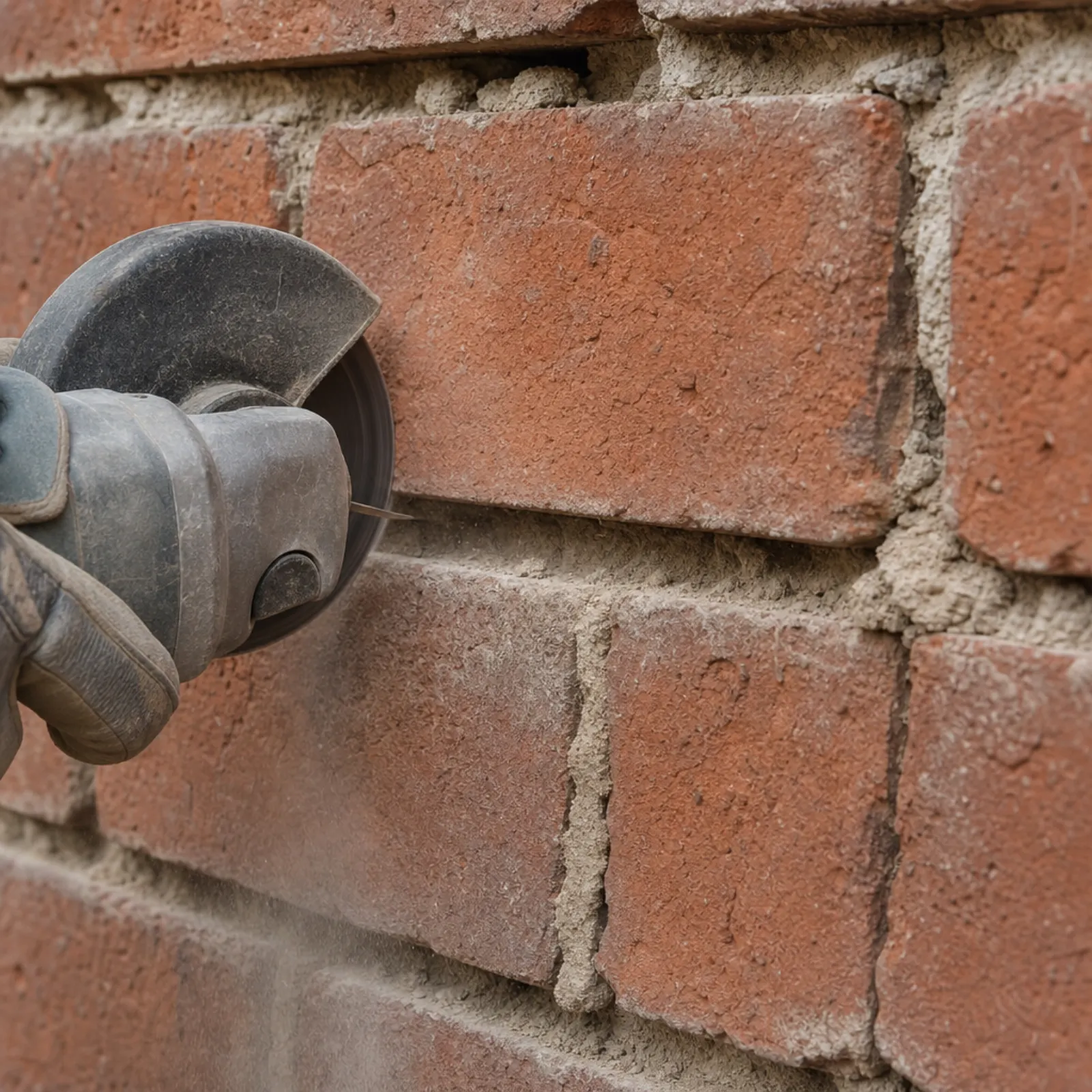
Tuckpointing in Dayton costs $8 to $20 per square foot of wall: failed mortar cut out to at least two and a half times the joint width, joints cleaned and dampened, new mortar packed in quarter-inch lifts and tooled to match the original profile, in a mix matched to the brick’s age and strength. One elevation on a two-story home usually runs $1,500 to $6,000. Send photos of the wall and the worst joints and you get a real number and an honest answer about whether the mortar is the whole problem.
In the Miami Valley, tuckpointing and repointing mean the same thing. What they do not mean is smearing new mortar over old joints. That is buttering, and it fails within two Dayton winters.
Why mortar fails in Dayton
Freeze-thaw, roughly 110 times a year. The Federal Highway Administration counts about 110 air freeze-thaw cycles a year in Ohio. Dayton’s NOAA 1991-2020 normals put the January high at 37.1 degrees and the low at 21.8, which is the worst possible combination for a brick wall: a thaw most afternoons, a freeze most nights, from November into April. Water in a joint expands about 9 percent when it freezes. Each cycle pushes the mortar a little further out; each thaw lets a little more water in behind it. A joint that was hairline in October is open by spring, and an open joint holds more water and fails faster.
41 inches of rain and 25 of snow. Dayton’s normal annual precipitation is 41.33 inches, spread through the year, plus 25 inches of snow. Walls here rarely dry out between November and April, and wet mortar is what freezes.
Clay that moves. The Miamian soil under most of Montgomery County runs 35 to 45 percent clay in the subsoil and carries a perched water table 2.5 to 3.5 feet down from January to May. It swells wet and shrinks dry, and the foundation riding it moves a little every year. That shows up in the wall as cracked joints along a line, usually at corners and above openings. Those joints get repointed, but if the crack steps up from a window corner, read the lintel page first.
The wrong mortar. The single most damaging thing done to Dayton brick in the last 60 years is repointing lime-mortar walls with hard Portland cement. More on that below.
Which mortar your house needs
Preservation Brief 2, the National Park Service’s standard on repointing, sets the rule: the new mortar must be softer in compressive strength and more vapor-permeable than the masonry units. Mortar is supposed to be the sacrificial part of the wall. If it is harder than the brick, thermal stress and trapped moisture leave through the brick face instead, and the face spalls off.
Dayton’s brick sorts into eras:
- 1820s to about 1930: lime mortar. The Oregon District (architecture from 1820 to 1915), St. Anne’s Hill (1860 into the early 1900s), Huffman (1870 to 1890, almost nothing after 1900), South Park (1880s to the early twentieth century), Dayton View (late 1880s through the 1930s), Grafton Hill (1880s to 1920s), and most of Oakwood’s 1920s streets. Portland cement was first manufactured in the United States in 1872 but was not common until the early twentieth century, and mortar in walls built between 1873 and 1930 ranges from pure lime-sand to lime-Portland blends. These walls get a Type K, Type O, or straight lime mix (the NPS designates it “L”) matched to a sample, with the choice depending on how soft the brick is and how exposed the wall.
- 1930s to 1970s: Type N. By the 1930s most masons used equal parts Portland and lime putty, and masonry cement arrived the same decade. Kettering’s postwar streets, the 10,707 Huber Homes brick houses built from 1956 on, and the mid-century ranches across Beavercreek and Centerville are hard, uniform, machine-made brick that take a Type N mortar (about 750 psi) comfortably.
- Post-1970s and concrete block: Type S. The hardest mix on the list, right for modern high-fired brick and block, wrong for anything older.
Guessing is not good enough. On any wall older than about 1940 a sample of the original mortar is examined for binder and sand before the mix is set, and a test panel goes in an inconspicuous spot before the main run.
Matching what you can see
Sand is most of what you see in a joint, so the sand is matched first: color, grain size, and roundness. Then the profile. Preservation Brief 2 catalogs the joints found on buildings of different eras: grapevine on the oldest work, flush and beaded on mid-to-late 19th-century brick, raked on 1920s wire-cut brick, concave on almost everything after 1950. Nineteenth-century fronts in South Park and St. Anne’s Hill often got finer, more careful joints than the sides and rear, so one house can carry two profiles. Where the brick edges have worn round, the new joint is recessed slightly so it does not read wider than the original and does not leave a thin feather edge to spall.
How the job goes
- Diagnose the water. Deteriorated mortar is usually a symptom of a leaking gutter, a failed crown, a downspout dumping at the wall, or ground moisture. Preservation Brief 2 says fix the source first or the repointing is wasted. The roof edge, the flashing, and the basement should all be checked before anyone quotes the wall.
- Remove to depth. Hand chisels and mash hammers on soft brick. A thin diamond blade only on wide horizontal joints in hard Portland-era walls, and never on the verticals. Mortar comes out cleanly with square corners at the back of the cut, and the joints are rinsed of dust.
- Dampen and pack. Absorbent old brick gets misted for hours before pointing so it does not suck the water out of the mortar. Joints deeper than an inch are filled in quarter-inch layers, each allowed to reach thumbprint hardness before the next, which is what prevents shrinkage cracks.
- Tool at the right moment. Tooled too soft, the joint comes out pale and hairline-cracks; too hard, it burns dark and does not seal against the brick.
- Cure. High-lime mortar hardens by carbonation, not drying, so it gets misted and covered with burlap for the first days. Portland-based mortar is protected from freezing and from baking sun.
Done to this standard, the NPS says a repointing job should last at least 30 years and preferably 50 to 100.
Historic districts and approvals
Dayton has 13 locally designated historic districts. Inside one, the city requires a Certificate of Appropriateness before exterior repairs or modifications; there is no fee, and the Preservation Officer can issue Minor COAs, typically the same day. Because repointing is not named on the city’s list of minor items, confirm with the Preservation Officer before any joint is cut. Painting unpainted brick is a Major COA and, frankly, a bad idea; it traps water. In Springfield, repointing inside the South Fountain and East High Street districts is a staff-level Review Process B that requires a mortar specification and a repointing sample, and the city’s own guideline recommends a 12 sand : 4 hydrated lime : 1 Portland mix for most historic walls.
What it costs
| Scope | Range |
|---|---|
| Tuckpointing | $8 to $20 per sq ft |
| Single elevation, two-story home | $1,500 to $6,000 |
| Service minimum (most crews) | $500 to $800 |
Mortar type, joint profile, access, and the fraction of the wall that has failed set the number. The pricing page has the full table, and the free calculators turn wall area, mortar era, and height into a range before you send anything. If more than a third of the wall has gone, or the brick faces are spalling, read the brick repair page too, because you are past a pure repointing job.
Timing
Close open joints before the freeze. NWS Wilmington puts Dayton’s average first fall freeze at October 25 and the average last spring freeze at April 16, and mortar wants wall temperatures between 40 and 95 degrees. A stable hairline in November can wait until April, and an honest mason will say so.
Repointing is covered across Dayton and out to Oakwood, Kettering, Beavercreek, Centerville, Huber Heights, and Springfield. Send a wide shot of the elevation and a close-up of the worst joint with a coin for scale.
Frequently Asked Questions
How much does tuckpointing cost in Dayton?
$8 to $20 per square foot of wall. A single elevation on a two-story home usually lands between $1,500 and $6,000, and most crews carry a $500 to $800 minimum. Historic lime-mortar work, fancy joint profiles, and scaffolded heights are the top of the range; a ground-floor mid-century wall in Type N is the bottom.
How deep should the old mortar be removed?
To a minimum of two to two and a half times the joint width, which on most Dayton brick means roughly a half inch to an inch, per the National Park Service's Preservation Brief 2. Any loose mortar beyond that depth comes out too. Shallower than that, the new mortar has nothing to bond to and pops out in a winter or two.
Do you use grinders on old brick?
Only on wide horizontal joints in hard Portland-era walls, and never on vertical joints, because a slipped blade cuts the brick above and below. On the soft hand-pressed brick of Dayton's 19th-century districts, joints come out with hand chisels and mash hammers, which Preservation Brief 2 calls the least damaging method. A wall with chipped brick corners from a grinder is the most common bad repointing job in the city.
Can you repoint just part of a wall?
Yes, and it is usually the right call when only a few areas have failed. Spot pointing costs more per foot than a contiguous run, though, and once 25 to 50 percent of a wall needs work the whole elevation is often the better buy, especially if scaffolding is going up anyway. Ask for a quote both ways when the wall is near that line.
How long does tuckpointing take and when can it be done?
A single elevation on a two-story home is typically a few days including cure checks, longer for lime mortar that needs misting and covering. Mortar wants wall temperatures between 40 and 95 degrees, so with Dayton's average freeze dates of April 16 and October 25 the working season is mid-April through October. Winter work under heated enclosures is possible for emergencies and priced accordingly.
More masonry services
Areas we serve
- Dayton, OH
- Tuckpointing and Brick Repair in Beavercreek, Ohio
- Tuckpointing and Brick Repair in Fairborn, Ohio
- Tuckpointing and Brick Repair in Huber Heights, Ohio
- Tuckpointing and Brick Repair in Kettering, Ohio
- Tuckpointing and Brick Repair in Miamisburg, Ohio
- Tuckpointing and Brick Repair in Oakwood, Ohio
- Tuckpointing and Brick Repair in Springboro, Ohio
- Tuckpointing and Brick Repair in Springfield, Ohio
- Tuckpointing and Brick Repair in Troy, Ohio
- Tuckpointing and Brick Repair in Xenia, Ohio
- Tuckpointing, Stone, and Brick Repair in Centerville, Ohio